
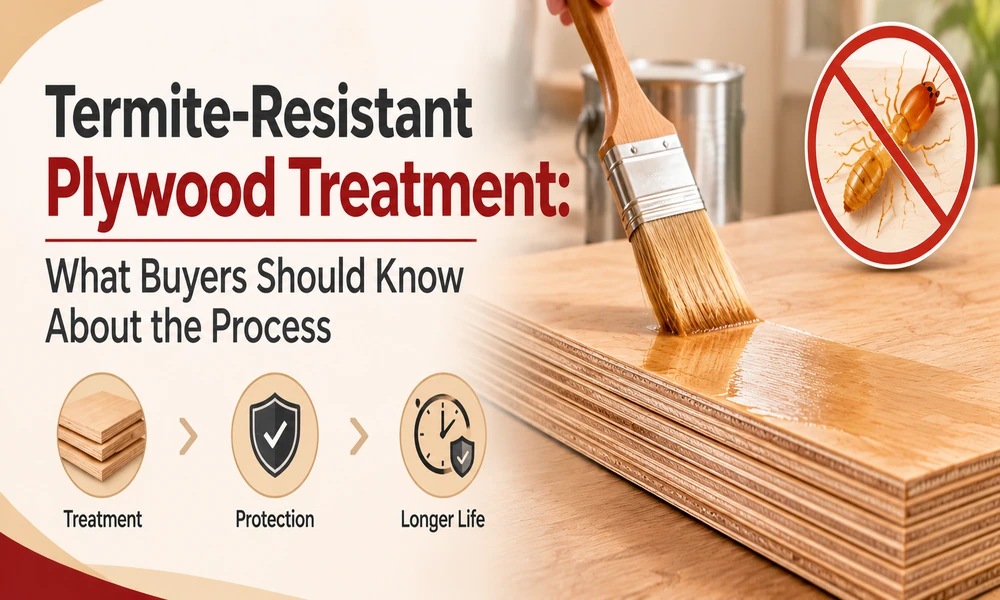
Wooden furniture, cabinets, and other interior parts might be damaged by termites and other pests sometimes before any signs are externally visible. Thus, it is necessary to understand how plywood is treated against termites in order to select the right material. Buyers shouldn’t limit themselves to labels, but should know what kind of protection the material offers, how it is applied, and when it can be applied.
When trying to pick termite-resistant plywood, buyers should pay attention to the treatment that preserves the wood, the core technology used, as well as the quality of the product being used. Such information may be useful for builders, architects, etc.
Why Is Plywood Treated Against Termites?
Plywood is produced when multiple layers of wood veneer are glued together. As wood can be subject to termites and other insects that spoil wood, appropriate treatment of the wood is necessary.
The level of protection depends on the treatment applied and wood preservatives used. Buyers should also know that the treatment won’t eliminate the risk of termites existing in a building. Thus, they should also deal with moisture, proper installation, etc.
How Does the Termite Treatment Process Work?
Different manufacturers apply different methods of plywood treatment. Buyers should ask about the method used for every specific product, since the process can vary considerably depending on the plywood product.
Preservative Treatment During Manufacturing
Preservatives can be applied to wood veneers or added to plywood production during an appropriate process. The goal is to safeguard the wood rather than to rely on some coating on the surface of the manufactured product.
Pressure Treatment
In pressure treatment, the preservative chemicals are injected into the wood under controlled pressure conditions to ensure penetration. The penetration and protection achieved by the pressure method depend on the wood material, the treatment method, and the chemicals used.
Treatment Across the Plywood Structure
The distribution of preservatives into plywood is essential as plywood is normally cut, drilled, and shaped in the course of making furniture. Therefore, it is important to know whether wood treatment is meant to ensure the protection of the whole wood panel and to understand how edges are treated.
It should not be assumed that these methods are the same for all manufacturers. One must refer to the technical documentation of the product provided by the company and find out about the type of treatment and its limitations.
What Should Buyers Check Before Purchasing?
When comparing termite-proof plywood, the buyer should not only rely on the information indicated on the label. The following questions should be asked for a better understanding of the plywood surface protection:
- Treatment method: What is the method of preservative application?
- Product specifications: What is the application and grade of the product?
- Quality documentation: Is there any certification supporting the protection of the wood?
- Intended purpose: Ensure that the plywood chosen fits the furniture or interior usage that is planned for it.
- Installation requirements: Find out if the cut edges, joints, or exposed surfaces need further treatment or sealing.
It must not be overlooked that termite-resistant and moisture-resistant plywood are two different concepts. Each relates to different performance specifications, and one should not be considered a guarantee of the other.
Treatment and Plywood Quality: Why Both Matter
While the term “treated plywood” refers to one aspect of the properties of plywood as a product, there are other qualities, such as veneer and adhesive construction of the plywood, that should be examined. It is important for a treated panel to provide the necessary properties while being able to hold the planned weight when installed.
In order to assess the purchase of plywood with termite protection, the buyer can check the specifications of Royale Touche plywood and match it against the needs of their project. Checking the details of treatment and usage of the plywood prior to getting a particular material ensures that it fits the expected purpose.
Installation Practices That Support Long-Term Protection
Although treated plywood needs to be appropriately stored and handled, proper storage is an important step before using the sheets. They need to be kept dry and protected.
When handling plywood, one needs to be sure that the cutting, drilling, edge treatment, and finishing are being done in accordance with instructions provided by the manufacturer. Near the premises where the plywood is being used, the building should be examined for potential signs of termites.
Conclusion
Knowing the steps of the treatment process enables the buyers to make the right decisions on plywood choice. By checking the methodology of the process, obtaining information about the product, and paying attention to the construction methods and conditions of installation, the buyer is able to minimize the risks of damaging the material.
