
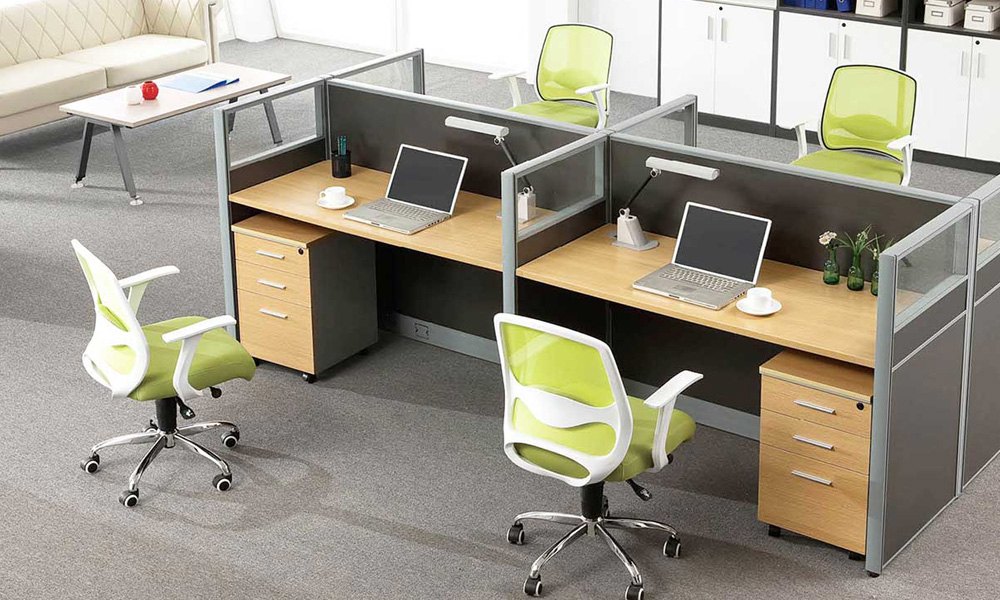
Office partition Singapore solutions represent one of the most impactful decisions businesses make when configuring workspace, yet the considerations behind these choices often receive insufficient attention. In a city where commercial real estate commands premium rates and every square metre carries significant cost implications, the strategic deployment of partition systems can dramatically affect productivity, privacy, collaboration, and ultimately, the bottom line. Understanding the variables at play requires examining not just the physical structures themselves but the organisational needs they serve and the spatial dynamics they create.
The Fundamental Purpose of Workspace Divisions
Partitions serve multiple functions beyond simple space division. They establish visual and acoustic boundaries, create hierarchies of privacy, manage traffic flow, and communicate organisational structure. The rise of open-plan offices over recent decades generated considerable debate about productivity and employee satisfaction, with research revealing that unobstructed sightlines and constant ambient noise often undermine concentration rather than enhance collaboration. Office partitions in Singapore have evolved in response, offering graduated privacy solutions that balance openness with necessary separation.
Primary Partition Categories
Full-Height Partitions
Floor-to-ceiling partition systems create complete enclosure, essentially forming rooms within larger spaces. These structures provide maximum acoustic insulation and visual privacy, making them suitable for executive offices, conference rooms, meeting spaces, and areas handling confidential matters. Construction typically involves aluminium or steel framing with infill panels of glass, gypsum board, or composite materials.
Glass variants maintain visual connectivity whilst providing sound dampening, an approach particularly valued in Singapore’s corporate culture where hierarchy coexists with transparency expectations. Solid panel versions offer complete privacy where discretion proves paramount.
Mid-Height and Low-Height Systems
Partial-height partitions, typically ranging from 1.2 to 1.8 metres, define workspace boundaries whilst preserving sightlines and facilitating supervision. These office partition systems Singapore solutions prove popular in environments balancing individual focus needs against collaborative accessibility.
Workstation partitions integrated with desk systems create modular configurations adaptable to changing team sizes and project requirements. The keyword search data reveals significant interest in “partitions for office” with 390 monthly searches, reflecting widespread demand for these flexible solutions.
Portable and Movable Partitions
Freestanding partition panels and mobile dividers offer maximum flexibility, enabling workspace reconfiguration without structural modifications. These prove particularly valuable for businesses anticipating growth, contraction, or evolving operational models. Rental markets include partition options, acknowledging that many organisations require temporary solutions during transitions or specific projects.
Material Considerations and Performance Characteristics
Acoustic Performance
Sound transmission represents a critical partition performance metric. Singapore’s Building and Construction Authority establishes standards for acoustic isolation in commercial buildings, though partition selection ultimately depends on specific use requirements. Conference rooms demand higher sound ratings than general office areas. Materials like mineral wool insulation, acoustic glass, and dense panel compositions significantly enhance sound dampening.
Visual Qualities
Transparency versus opacity creates distinct workplace atmospheres. Clear glass partitions maintain visual openness whilst providing acoustic separation. Frosted or tinted glass offers graduated privacy. Solid panels provide complete visual isolation. The choice reflects organisational culture, with Singapore businesses increasingly favouring glass solutions projecting modernity and transparency.
Durability and Maintenance
Commercial partitions must withstand daily wear including impacts, surface contact, and cleaning regimens. Aluminium frames with powder-coated finishes resist corrosion in Singapore’s humid climate. Glass panels require regular cleaning to maintain appearance. Fabric-covered panels may show wear more rapidly in high-traffic areas but offer superior acoustic absorption.
Space Planning Strategies
Traffic Flow Analysis
Effective workplace partitions Singapore deployment requires mapping movement patterns through the office. Partition placement should channel traffic efficiently whilst minimising disruption to focused work areas. Major circulation paths warrant wider clearance, whilst quieter zones can accept narrower passages.
Natural Light Distribution
Singapore’s equatorial location provides abundant natural light year-round, making window access valuable. Partition strategies should maximise daylight penetration into interior spaces. Glass partitions preserve light transmission whilst defining zones. Positioning solid partitions perpendicular to windows rather than parallel optimises light distribution.
Flexibility and Future Modifications
Modular partition Singapore systems accommodate organisational evolution more readily than fixed construction. Businesses should anticipate potential headcount changes, team restructuring, and technology integration requirements when selecting partition approaches. Modular systems using standardised components enable reconfiguration without complete replacement.
Regulatory Compliance Factors
Fire Safety Requirements
Singapore’s fire safety regulations establish strict requirements for partition materials and construction. Fire-rated partitions prove necessary in specific applications, particularly when creating enclosed rooms. The Building and Construction Authority and Singapore Civil Defence Force publish detailed specifications governing partition fire resistance ratings based on building use and occupancy.
Accessibility Standards
The Building Control Act incorporates accessibility requirements affecting partition placement and corridor widths. Clear passage widths must accommodate wheelchair users and comply with barrier-free access provisions.
Cost Structures and Investment Considerations
Partition costs vary dramatically based on materials, height, acoustic performance, and installation complexity. Basic workstation panels might cost substantially less per linear metre than floor-to-ceiling glass systems with doors and hardware. Installation represents a significant cost component, particularly for fixed systems requiring electrical integration, data cabling, or HVAC modifications.
The rental versus purchase decision mirrors broader furniture considerations. Businesses facing temporary space needs or uncertain futures might explore office partition singapore options, whilst established operations with stable requirements typically favour purchasing.
Installation and Timeline Factors
Partition installation disrupts normal operations, making project planning essential. Simple workstation panel installations might complete within days, whilst comprehensive floor-to-ceiling systems throughout an office could require weeks. Coordination with other trades including electricians, data specialists, and HVAC contractors adds complexity.
Making Informed Partition Decisions
The proliferation of options available in the office partition singapore market demands systematic evaluation of organisational needs, spatial constraints, regulatory requirements, and budgetary realities to identify solutions truly serving business objectives.
