
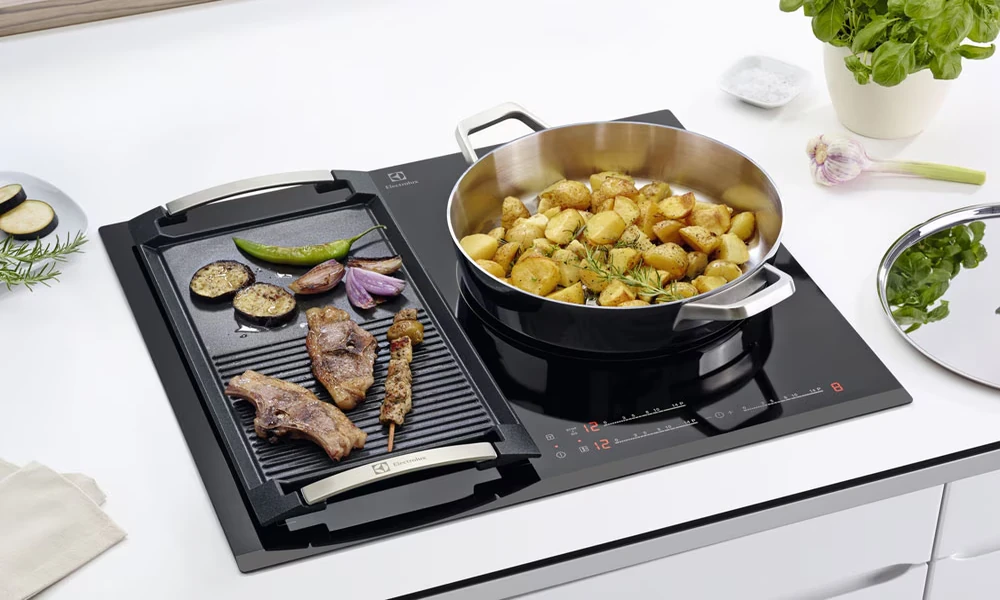
Choosing between an induction cooktop and a conventional electric hob is one of the more consequential kitchen decisions you will make. Both are clean, easy to maintain, and free from the installation requirements of gas, but they operate differently and deliver different cooking experiences. Understanding the comparison helps you select the type that best matches your cooking habits, kitchen setup, and budget.
How Each Technology Works
A conventional electric cooktop heats a ceramic or glass surface using resistive heating elements positioned below. The heat transfers from the surface to the pan. An induction cooktop uses electromagnetic fields to generate heat directly within the base of a compatible pan, leaving the glass surface itself largely cool. The difference in mechanism has significant implications for performance, safety, and energy efficiency.
Heating Speed and Precision
The induction cooktop vs electric comparison is most stark when it comes to speed. Induction heats water and pans significantly faster than conventional electric – bringing a full pan of water to boil in roughly half the time. Temperature response is also nearly instantaneous on induction, compared to the lag inherent in conventional electric elements which continue to hold heat after being turned down or off.
Energy Efficiency
Induction is measurably more efficient than conventional electric cooking. Because heat is generated directly in the pan rather than in the hob surface, energy transfer losses are minimal. Conventional electric hobs lose a portion of their energy heating the glass surface and the surrounding air. For households cooking frequently, this efficiency difference is reflected in reduced energy consumption over time.
Safety
The cooler glass surface of an induction hob is one of its most practical safety advantages. Spills do not bake onto the surface at the same rate, and the risk of contact burns is significantly lower than with conventional electric surfaces that retain heat long after cooking. For households with children, this difference in residual surface temperature is a meaningful consideration.Brands like Ciarra One manufacture both induction and conventional electric hobs with safety features including automatic pan detection, child locks, and residual heat indicators designed to address the specific characteristics of each technology.
Cookware Compatibility
Induction requires magnetic-base cookware – cast iron and most stainless steel pans are compatible, while copper and aluminium pans require an induction-compatible base. If your existing cookware is not induction-compatible, factor the cost of replacement into the overall comparison. Conventional electric hobs work with any cookware, which avoids this consideration entirely.
