
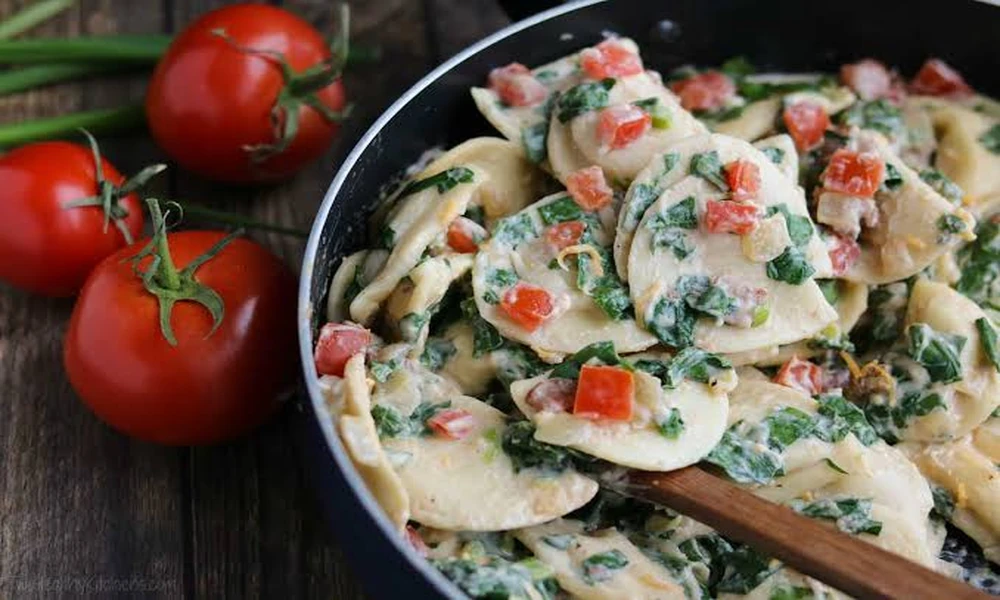
For a first dinner cooked together, agree on a food you both want and divide the work into clear, manageable parts. A dumpling meal can provide a defined central item while leaving room for each person’s preferences. You do not need to impress each other with a complicated menu. The useful discovery is how you enjoy preparing and sharing food together.
Start with one honest preference from each person
Begin with what you like eating rather than what you think the other person expects. One person might enjoy savory sweet potato, while the other prefers a tart accompaniment. Those preferences can coexist on a plate. They provide more direction than both saying that anything is fine and hoping the shopping choices will somehow align.
Include dislikes and requirements without turning them into an apology. If peppers are unwelcome or a filling needs to be meatless, say so before selecting the meal. A clear preference makes it easier for the other cook to contribute. Guessing correctly should not be part of the evening’s challenge.
Talk about the kind of dinner you want too. A relaxed seated meal, a small supper before another activity, and a long cooking project are different occasions. Agree on the level of preparation that feels comfortable. Someone who hoped to talk over dinner may not want the whole evening spent learning an unfamiliar technique.
Keep the first menu modest enough that you can notice each other’s habits. You might learn that one person likes to finish preparation before cooking begins, while the other is comfortable working in stages. Neither approach needs a verdict. The meal gives you a chance to coordinate a specific task together.
Choose the filling before dividing the work
Look at actual filling descriptions together. Among the frozen pierogi choices in Philadelphia, Sassy Sweet Potato combines sweet potato, potato, and garlic in a full-size, plant-based dumpling. That is a savory dinner choice, not a dessert dumpling. The description can help both people decide whether it fits the meal they imagined.
Once a filling is agreed, choose an accompaniment that answers another preference. A tart vegetable side could provide contrast if that appeals to you both. There is no need to choose several dumpling varieties merely because it is your first meal together. One mutually welcome filling leaves more attention for the shared process.
Read the current package directions before assigning jobs. The product is frozen and uncooked, and the preparation method determines which tools and steps are needed. Do not divide the work around an assumed cooking method and then discover that the package calls for a different setup.
Check the kitchen’s available space. If only one person can work comfortably near the stove, the other can handle a task elsewhere. Cooking together does not require standing shoulder to shoulder at every stage. A useful division lets both people contribute without repeatedly moving out of each other’s way.
Settle the serving arrangement at this point. Decide whether you will plate in the kitchen or bring a shared dish to the table. Finding plates and utensils can be part of one person’s task, rather than an interruption that happens just as the food is ready.
Give each cook a complete small task
A complete task has a clear result. One person can prepare the dumplings according to the package, while the other prepares and serves the agreed side. This is easier to coordinate than both people alternately stirring, chopping, and searching for utensils without knowing who is responsible for the next step.
Let the person doing a task understand its boundaries. If the side includes a dressing, decide whether they are choosing it or following a shared preference. If someone is setting the table, show them where the dishes are rather than making an unfamiliar cupboard arrangement into a guessing game.
Ask before changing the other person’s work. A suggested garnish may be welcome, but adding it without discussion can undo an agreed flavor choice. The same applies to adjusting heat or timing during cooking. Shared preparation benefits from simple communication, especially when the cooks have not yet developed a familiar rhythm.
If a task finishes early, use the pause rather than inventing another dish. Bring out drinks, clear the preparation area, or simply talk while the other person finishes. An extra contribution does not have to mean another ingredient or a more elaborate plate.
When something is uncertain, consult the relevant directions together. There is no need for either person to appear more experienced than they are. Finding the answer in the package or clarifying the plan can be part of a comfortable first cooking experience.
Notice what made the process comfortable
At dinner, talk about what you enjoyed in the meal without turning it into a performance review. Perhaps the garlic in the sweet-potato filling worked well with the side, or perhaps a simpler finish would suit the next meal. Specific observations are easier to use than a broad declaration that the dinner was perfect or unsuccessful.
Notice the working arrangement as well. Did each person have enough space? Was the handoff from cooking to serving clear? Did the chosen tasks leave room for conversation? These details can shape a second shared meal more usefully than trying to increase the menu’s difficulty.
Leave one idea for next time rather than redesigning everything at once. You might keep the same filling and switch who prepares it, or try another accompaniment together. A first dinner has succeeded when it gives you a comfortable place to begin again.
