
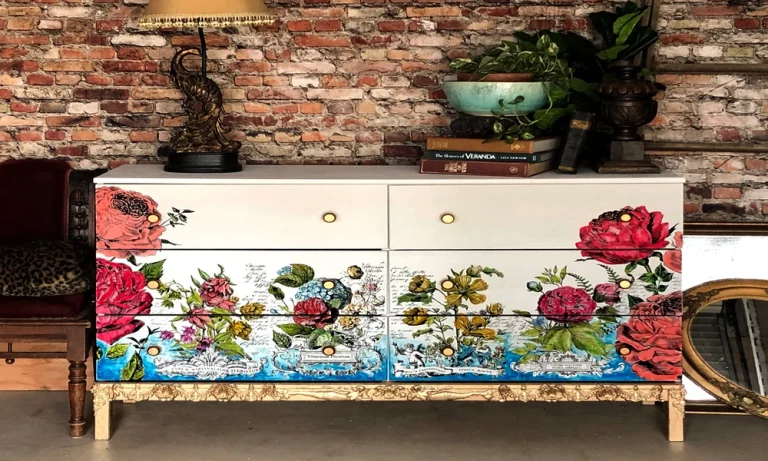
A floral dresser can feel softly aged or sharply detailed, even when the colors are similar. Much of that difference comes from the decorating method. Paint inlays and furniture transfers both bring intricate designs to furniture, but they behave differently during application and create distinct finishes.
The practical choice starts with the result you want. Choose an inlay for an embedded, painted effect with natural variation. Consider a transfer for a defined decorative image applied to a prepared, dry surface. Milton’s Daughter offers both, making it a useful starting point for planning a furniture makeover.
What Makes Paint Inlays Different?
Paint inlays carry actual paint on a paper sheet. In the basic application, the design goes face down into wet, compatible chalk-type paint. After drying, the paper is moistened and carefully removed, leaving the painted image on the surface.
Milton’s Daughter’s guide to IOD Paint Inlays explains the process, including preparation, application and finishing options. The appeal is the character of the result: small variations help a decorated piece feel individual.
This approach suits a cottage-style cabinet, a romantic bedside table or a dresser intended to look collected over time. Think about whether subtle irregularity belongs in the room. If a perfectly uniform image is essential to the design, that preference should influence the choice before materials are purchased.
How Furniture Transfers Work
Here, furniture transfers mean decorative rub-on designs, particularly IOD’s pressure-sensitive transfers. They release from a carrier sheet when rubbed onto a suitable surface. They do not require the wet paint layer used in a basic inlay application.
Iron Orchid Designs’furniture transfer application guidance recommends a clean, dry, matte surface and fully cured paint. Its current guidance also recommends a dry, matte, water-based sealer beneath the transfer for good adhesion.
For someone who wants a distinct botanical arrangement on a cabinet door, a transfer is a practical option. Plan its placement carefully before allowing the adhesive to touch. Once applied, rub down the design thoroughly and check the edges.
Compare the Two at a Glance
| Project consideration | Paint inlays | Furniture transfers |
| Desired appearance | Painted character with natural variation | Defined decorative imagery |
| Basic application | Embedded into wet, compatible paint | Rubbed onto a prepared, dry surface |
| Creative approach | Suits blending and painterly effects | Suits planned image placement |
Neither method is automatically the better choice for every piece. A broad dresser front might invite a sweeping floral composition, while a small drawer may need only one carefully positioned motif. Choose the scale before choosing the technique.
Consider Reuse and the Finish You Expect
According to the manufacturer’s paint inlay usage guidance, a used sheet can usually produce a faded second impression and sometimes a third. Those later impressions are part of the creative appeal, rather than identical copies of the first result.
That distinction matters when planning matching furniture. A softer second impression could look lovely on a coordinating box, but may disappoint someone expecting two equally saturated bedside tables. Budget for the intended finish, rather than assuming every reuse will look the same.
With transfers, unused motifs can be saved for another project. Sketch the arrangement first so a large sheet does not get committed to one piece unnecessarily. Compare usable design area, required supplies, and the number of projects when assessing value.
Preparation and Sealing Deserve Attention
For a first inlay project, follow IOD’s recommendation for a compatible non-polymer chalk-type paint. Other paints or clear mediums require different timing and testing. A sample board is a sensible place to learn the process before decorating a large cabinet.
Inlay pigment remains water-reactive until sealed. Allow the work to dry fully, then follow a compatible sealing method; overworking a brushed water-based finish can move pigment. For IOD transfers, follow the recommended water-based protective finish and avoid harsh solvent-based sealers. Wax belongs after transfer application, not underneath it.
The decoration is only one part of the finished furniture. Choose protection suitable for how the piece will be used, and respect the finish manufacturer’s curing instructions before returning it to service.
Choose the Method That Fits Your Vision
For a softly aged, painted appearance, an inlay is a strong candidate. For defined imagery on a prepared surface, a transfer may suit the project better. Start small if either method is unfamiliar, and let a sample guide the decision.
Bring together your preferred colors, furniture measurements, and a clear idea of the finished room. Explore Milton’s Daughter’s designs and tutorials to choose the materials and finish for your next furniture makeover.