Introduction
Did you recently move your old refrigerator to your shed, garage, or cellar and noticed that it is not functioning properly? If so, you’re not alone. Many people have no idea how much the ambient temperature of a room can affect the functioning of refrigerators. The quick and easy solution to the problem is to move the refrigerator to the previous location. However, in some cases, you may need to hire a refrigerator repair technician by searching “refrigerator repair near me” online if the damage done is too severe.
The Details
Let’s look at how temperature can affect your refrigerator:
- The effect of cold temperature on refrigerators – Any appliance that is used to cool something such as refrigerators, air conditioners, and fridges contains a substance called refrigerant that is used to transfer heat from one area to another during a heat cycle. For the cooling function to work properly, the refrigerant must boil properly under heat and pressure.
When the ambient temperature of a room gets below 60ºF, the refrigeration system requires more energy to bring the refrigerant to a boil and change it into vapor. As a result, the energy consumption increases as the ambient temperature continues to reduce until at 32ºF, after which point the refrigerator cannot cool at all.
- The effect of hot temperature on refrigerators – The ambient temperature of a room in which a refrigerator is located must be lower than the temperature that the condenser can heat up to. This is because the condenser of the refrigerator cools down by radiating away the heat into the surrounding cool air. However, when the ambient temperature is very high, the condenser cannot cool down properly which causes the refrigerator to function inefficiently.
Plus, when the room temperature gets above 90ºF, the temperature inside the refrigerator can vary considerably if it is opened frequently.
- Why extreme temperatures can damage refrigerators – The ideal ambient temperature range of a refrigerator is between 60ºF to 90ºF. An extremely low temperature can cause the oil inside it to become thick and damage the compressor and sealed system. An extremely hot temperature can cause the oil to overheat and break down. For the best result, we recommend that you consult the owner’s manual that came with your specific refrigerator model to realize the suitable operating temperature range.
- Other problems – The operating efficiency of your refrigerator can also be affected by the placement of it inside a room. For instance, if you place it too near the walls, then there would be no space for it to circulate the air and dissipate the heat. This is true even if the ambient temperature is within the suitable range. It is also important to clean the grill periodically and keep the door seal tight to keep it working at peak efficiency.
Refrigerator temperature guide
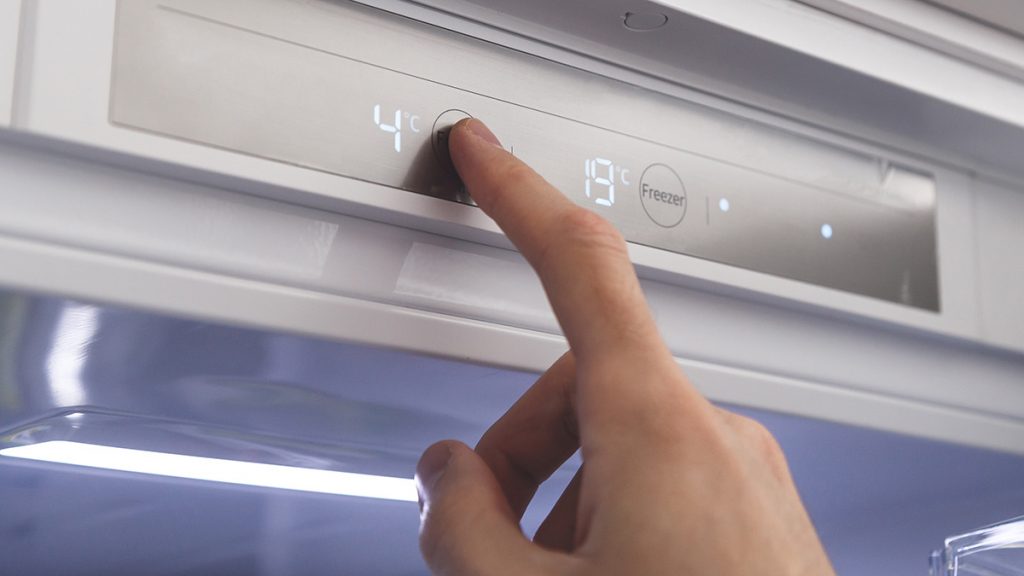
According to the U.S Food and Drug Administration (FDA), the recommended operating temperature that a refrigerator should be kept at is below 40ºF and for a freezer, it is 0ºF. At above 40ºF, it can facilitate the growth of harmful bacteria.
The ideal temperature for a refrigerator is between 35° to 38°F. For safety purposes, we recommend you err on the side of caution and set the refrigeration temperature a little lower since the temperature can be offset during hot weather.
At 32°F or below, the food in your refrigerator would start to freeze. So, it is better to keep the temperature above 32°F unless you want it to freeze. However, for that matter, it is better to store the food inside the freezer which is better equipped to store frozen food.
How to check the temperature of a refrigerator
To check the temperature of your refrigerator, you can use a freestanding appliance thermometer. They are easily available online and are usually inexpensive. All you have to do is place the appliance thermometer inside the refrigerator for about 20 minutes before checking the reading.
Using an appliance thermometer to check the temperature of your refrigerator is incredibly helpful since many units don’t come with a temperature display at all. And the ones that do may not be accurate. In fact, it is not uncommon to see a temperature variation of plus/minus 5°C.
How to keep your food at a safe temperature inside a refrigerator
It is important to keep your refrigerator and the food inside it at the suggested temperature for proper safety and maximize the efficiency of the appliance. Here are a few ways to do it:
- Examine the door seals for leaks – There should be no tears or leaks in the gaskets around the edge of your refrigerator since it is responsible for keeping warm air out and cool air inside. Even a small leak or tear can reduce the effectiveness of the process. As a result, it can not only take longer for food to get cooled but also result in higher monthly energy bills.
- Allow the food to cool down before putting it inside – It can be tempting to put hot food inside your refrigerator and get it over with. However, it not only reduces the efficiency of cooling but also puts the other food stored inside the refrigerator at the risk of bacterial growth due to a sudden rise in temperature. Thus, it’s better to allow the hot food to cool down a little before storing it inside a refrigerator.
- Keep the fridge about 80% full – When the refrigerator has a lot of cold food in it, the temperature inside can be maintained more easily. However, you should not overstuff it to allow cold air to circulate inside freely to keep the food cold.
Conclusion
If you want to move your refrigerator to a new room where the temperature is more stable to fix a problem, chances are that it would not solve the problem. If the damage is already done to the system due to extreme temperature circulation, it is better to replace the unit or repair it by hiring an expert. You can easily find a refrigerator repair professional by searching “refrigerator repair near me” on Google.