
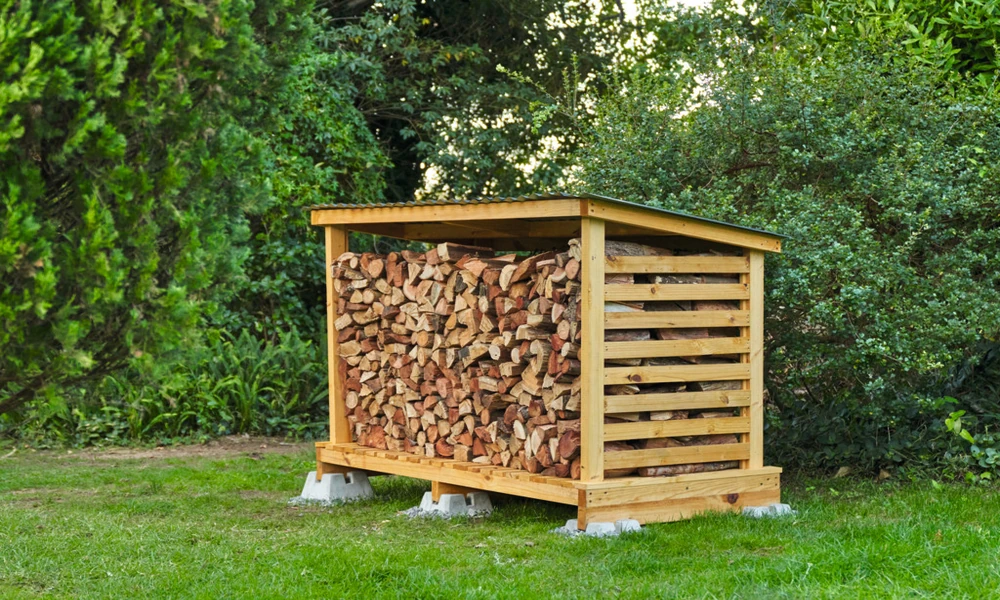
A well-designed firewood storage space can help keep the wood dry, accessible, and in good condition while also making managing a home’s fuel supply easier. It may seem practical to just stack logs, but improper storage can result in moist wood, unstable stacks, pest issues, and needless clutter. It doesn’t take a complex structure to create an efficient space. Homeowners may create a storage area that is safe and useful with the correct base, location, ventilation, and arrangement.
Choosing suitable firewood storage solutions can make it easier to maintain a dry, organized, and accessible supply throughout the season. The best approach should account for the amount of wood being stored, available space, local weather conditions, and the need for proper ventilation. Whether using a simple raised rack or a covered open-sided shelter, thoughtful planning can help protect firewood from excess moisture while keeping the storage area practical and easy to maintain.
2. SELECT THE RIGHT LOCATION
The first step is to locate the storage room in a sensible location. When firewood is needed, it should be easily accessible yet placed far from potential fire threats. An additional safety margin can be provided by keeping the stack a reasonable distance from the house, heating equipment, outbuildings, and other combustible structures. Additionally, the space should have adequate drainage to prevent rainwater from building up beneath the wood that is being stored.
3. BUILD A RAISED BASE
Firewood shouldn’t be placed on bare ground. Moisture can enter the logs through contact with the ground, which can promote rot and insect activity. The wood can be hoisted above the ground using a strong rack, elevated platform, or other appropriate support. The base needs to be level and sturdy enough to hold the stack’s weight. Additionally, allowing room underneath promotes airflow, which keeps the wood drier.
4. ALLOW PLENTY OF AIRFLOW
Good ventilation is essential when storing firewood. Logs need air circulation to release moisture and remain suitable for burning. Avoid pushing the stack tightly against walls or surrounding it completely with an airtight covering. A simple open-sided shelter can provide useful protection while allowing air to pass through the pile. Arranging logs with small gaps between them can further improve circulation.
5. PROTECT THE STACK FROM WEATHER
Rain can’t soak the wood if there is a roof or other cover. However, if the entire pile is covered with plastic without ventilation, moisture may be trapped and an environment conducive to the growth of mould. The lower and side sections should ideally stay adequately open while the top and upper sides are shielded. Natural ventilation and weather protection should be balanced in the storage design.
6. CONCLUSION
The key to creating an effective firewood storage facility is careful planning, not costly construction. Storage conditions can be greatly enhanced by selecting an appropriate site, lifting the wood off the ground, preserving airflow, and shielding the stack from excessive moisture. Additionally, gathering firewood throughout the season is made easier with a tidy and easily accessible setup. Homeowners can design a storage space that keeps their firewood safe, arranged, and prepared for use when needed by combining practicality with fundamental safety precautions.

Comments are closed.